
“Representation measures who enters the room. Inclusion determines whether people can thrive once they’re there.” In conversations about gender equality, we often celebrate numbers: More women in leadership, More women in technology, More women in transport etc.
These milestones matter. Representation is an important indicator of progress. But over the past year, while building Uganda’s first women-centred mobility enterprise, I’ve come to appreciate an uncomfortable truth:
Representation alone does not create inclusion.
In fact, representation without institutional change can leave people navigating systems that were never designed with them in mind. That realization has fundamentally changed how I think about leadership, entrepreneurship, and systems change.
The Question That Changed Everything
When I began driving on ride-hailing platforms, one question kept coming up in conversations with passengers. “Do you know another woman driver?” At first, I thought it was simply a matter of numbers. There weren’t enough women in the transport sector. But as those conversations continued, I realized something deeper. People weren’t only asking for more women drivers. They were looking for safety, Trust, Professionalism, Comfort, and Choice.
That question exposed something much larger than a workforce gap. It revealed a systems gap. The challenge wasn’t simply increasing the number of women entering transport. It was understanding why so few stayed, succeeded, or felt supported once they entered.
Building More Than a Transport Company
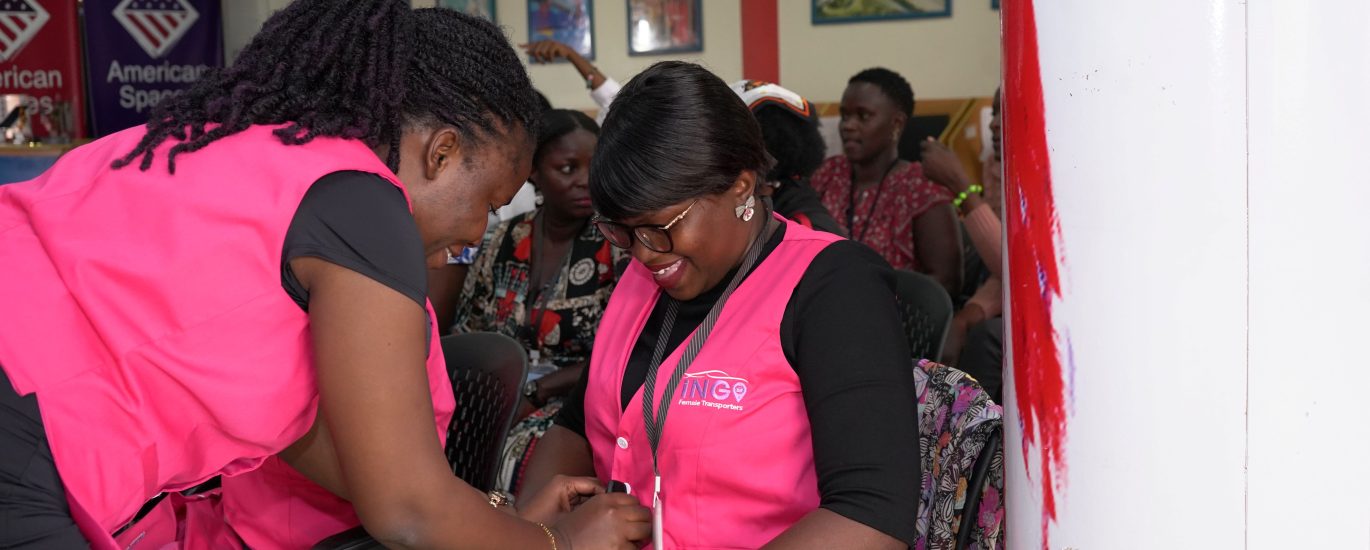
That realization became the foundation for Ingo Female Transporters. Many people assume INGO exists to recruit women drivers. It does but that’s only part of the story. The bigger question we asked was the following:
How do we redesign the mobility ecosystem so women can participate safely, confidently, and sustainably?
That question forced us to think beyond recruitment and begin asking different questions.
How do women experience safety differently?
What training enables confidence, not just competence?
How should reporting mechanisms work?
How do customer expectations shape women’s experiences?
What role should technology play in building trust?
How do we create professional pathways instead of temporary opportunities?
These are not transport questions alone. They are systems design questions.
Representation Measures Access. Inclusion Shapes Experience.
Too often, organizations celebrate representation because it is visible. It’s easy to count how many women were hired, promoted, or recruited. Inclusion is harder because it asks different questions.
Do people feel safe?
Do they belong?
Can they influence decisions?
Can they build long-term careers?
Do the rules, incentives, and institutional culture enable their success?
Those questions are much more difficult because they require organizations to examine themselves, not the individuals they are trying to include. I’ve come to believe that representation measures who enters the room. Inclusion determines whether people can thrive once they’re there.
Why This Matters Beyond Transport
Although these lessons emerged from transport, they extend far beyond mobility. The same principle applies to workplaces, public institutions, education and health systems, digital platforms, and increasingly, artificial intelligence. Today, many conversations about AI focus on reducing algorithmic bias. Much as those conversations are important, bias is often a symptom rather than the root problem.
If the institutions designing AI are not inclusive, if marginalized voices are absent from decision-making, and if governance structures fail to prioritize equity and accountability, then technology simply scales the assumptions that already exist. AI cannot solve institutional exclusion because it often inherits it. That is why conversations about inclusion must begin long before technology is deployed.
From Representation to Systems Change
One of the greatest lessons entrepreneurship has taught me is that lasting change rarely begins by asking the following:
“How do we include more women?” Instead, it begins by asking:
“What assumptions were these systems built upon, and who was left out when they were designed?”
When we ask better questions, we begin designing better institutions. And when we design better institutions, inclusion becomes more than a target. It becomes part of how systems naturally function.
Looking Ahead
As I continue building INGO and engaging with organizations across gender equality, technology, public policy, and institutional development, this is the question I find myself returning to most often:
What would our institutions look like if inclusion were considered a design principle instead of an afterthought?
Because lasting change isn’t simply about opening more doors. It’s about redesigning the buildings behind those doors.
I’d love to hear your thoughts.
Where have you seen the difference between representation and true inclusion in your own work or community?
What institutional assumptions do you think we need to challenge if we are serious about building more inclusive societies?